
Interview · Weight loss after 40
Weight Loss After 40 in Calgary:
What Changes and What Works
Most of Paul Anthony's clients over 40 want the same things: to lose weight, get leaner and build some lean muscle. In his experience the biggest gap is rarely effort. It is protein, structure and a plan that starts where you actually are.
The conversation
Key insights
- 01
Paul's clients over 40 most often want weight loss, body contouring, lean muscle and to get leaner.
- 02
The most common gap he sees, especially in women, is protein: often about half of what he would recommend.
- 03
Everyone starts at Level 1 of his 12-level program and moves up only when they are executing well.
- 04
Fat loss after 40 still runs on the basics: regular meals, strength training, sleep and consistency.
01
What clients over 40 come in wanting
When we asked Paul Anthony who his typical clients over 40 are, his answer was simple. They want to lose weight, change their shape and feel stronger.
“Usually it's weight loss, body contouring, building some lean muscle mass, and just getting leaner.”
Paul Anthony
That matters because it frames the goal correctly. For most people in their 40s and 50s the aim is not just a lower number on the scale. It is losing fat while keeping, or building, the muscle that makes you look and feel fit. That is why every Dreambody plan pairs a meal plan with resistance training rather than relying on dieting alone.
02
The gap Paul sees most often: protein
Asked what makes fat loss feel harder after 40, Paul did not point to a secret. He pointed to what people are actually eating, and protein in particular.
“Protein intake is usually low, about half of what it should be. Most women should have over 100 grams of protein. Let's say they weigh about 130 pounds: they should have about 100 grams. Most have 30 to 50 grams, really, and the rest is mostly carbs and vegetables.”
Paul Anthony
Those numbers are Paul's coaching rule of thumb from three decades of writing meal plans, not a prescription for everyone. Your own target depends on your body, your training and your health, and anyone with a medical condition that affects their diet should check with their doctor. The point Paul makes is practical: if most of your plate is carbohydrates and vegetables and very little is protein, that is usually the first thing to fix.
03
Start low, then build
The other thing that changes after 40 is how much a poorly planned start can set you back. Paul's answer is structure. His program has 12 levels, and everyone, however experienced they think they are, starts at Level 1.
“It's like an airplane taking off. You start off very low, then the airplane takes off and accelerates into the sky.”
Paul Anthony
Clients move up a level when they are executing well in their workouts, their eating and their cardio. Some graduate after two weeks, some after a month or two, and some need two or three months at Level 1. Coming back after a break? You start again at Level 1. You can read more about how that works in our interview on personal training over 40.
04
What still works after 40
None of what Paul described is complicated, which is the point. The things that work are the things you can keep doing:
- Regular, balanced meals. At least three meals a day with protein, carbohydrates, vegetables and healthy fats. No crash diets.
- Strength training. Progressive resistance training to build lean muscle while you lose fat.
- Sleep. Paul tells clients to aim for seven to nine hours a night.
- A plan that adapts. Moving up levels based on how you are actually doing, not on a calendar.
If you want help putting that together, Paul coaches weight loss in Calgary one-on-one and online. It starts with a free consultation in the gym or by phone.
More from this interview: weight loss for men over 40 and how to choose a weight loss personal trainer in Calgary.
Check with your doctor first. If you have a medical condition, take medication, are dealing with sudden or unexplained weight gain, or have symptoms that worry you, speak with your physician before starting or changing a program. Paul is a personal trainer, not a medical provider, and this article is general information, not medical advice.
FAQ
Frequently asked questions
Is it harder to lose weight after 40?
Many of Paul's clients over 40 find fat loss feels harder. The most common gap he sees is low protein intake and an unstructured plan, so he starts there: balanced meals, enough protein and a training program that starts at Level 1 and builds.
How much protein does Paul recommend?
As a coaching rule of thumb, Paul says most women should get over 100 grams of protein a day; for a woman of about 130 pounds that is roughly 100 grams. Individual needs vary, so ask your doctor if you have a medical condition that affects your diet.
Do I need to diet strictly to lose weight after 40?
No. Paul avoids crash diets and rigid rules. He coaches at least three balanced meals a day with protein, carbohydrates, vegetables and healthy fats.
Can I train with Paul if I'm not in Calgary?
Yes. Paul trains clients one-on-one in Calgary and coaches clients anywhere through online personal training, with video check-ins every couple of weeks.
Read the full transcript
This transcript has been lightly edited for clarity: filler words and repeated questions were removed and obvious speech-to-text errors were corrected. Brief passages marked [...] were omitted, along with closing questions about permissions and scheduling. The client example is anonymized.
Sam (StyleLabs)Let's start with your typical clients over 40. What kinds of goals and concerns do they usually bring to you at Dreambody?
PaulUsually weight loss, body contouring, building some lean muscle mass, and just getting leaner.
Sam (StyleLabs)From your coaching experience, what tends to make fat loss feel harder for people after 40, and what approaches still work well for them?
PaulLike for everyone else: eating healthy, and eating enough protein especially. Women especially don't have enough protein. Protein intake is usually low, about half of what it should be. Most women should have over 100 grams of protein. Let's say they weigh about 130 pounds: they should have about 100 grams of protein. Most have 30 to 50 grams, really, and the rest is mostly carbs and vegetables.
Sam (StyleLabs)When you're working with someone over 40 who is starting strength training for the first time, or coming back after a break, how do you structure their program so it's safe and effective?
PaulI have different levels of training, level 1 to level 12. So if they were at level 5 when they quit, when they come back they go right back to level 1 and start over. It's like an airplane taking off. You start off very low, then the airplane takes off and accelerates into the sky. So you start off at level 1, then level 2, level 3, level 4, and you move up according to where you are.
Sam (StyleLabs)For men over 40, what patterns do you notice with fat loss, recovery and consistency? And how does that compare with what you see in women?
PaulMen usually hold it around the belly, like a beer belly type. That's where they hold most of their fat. Women usually hold it in their lower body: hamstrings, butt, thighs, inner thigh, outer thigh and so on. That's how the fat is normally distributed.
Sam (StyleLabs)For women in perimenopause or menopause, what do they usually tell you they're struggling with, and how do you adapt their training and help set realistic expectations?
PaulWomen in their 40s going through perimenopause, usually it's weight loss and sudden weight gain. What I tell people going through menopause is that they need to do a little bit more higher-intensity cardio. For example, sprints of 30 seconds at a time, then a two- or three-minute break, is really good. [...] So more interval-type training is good for menopause and perimenopause. But first I start them off a little lighter. And also strength training: you need strength training two to four times a week as well, and an adequate amount of protein. Those are the things that are very important.
Sam (StyleLabs)Where does a trainer's role end? Are there situations where you recommend clients see their physician before or during a program, especially over 40?
PaulFor those over 40 with a lot of sudden weight gain, yes. I also like to see where they're at for probably the first two weeks. Then, if they're really having big-time struggles, I might suggest they see where their hormones are at. If estrogen is out of control, testosterone is very low or their thyroid might be off, I really want to make sure the doctor, ideally an expert in female hormones specifically, checks their hormones.
Sam (StyleLabs)When you coach nutrition and protein, how do you guide clients without crash diets or rigid promises about weight loss?
PaulI try not to get into too much about specifics. I just say: “You need at least three meals a day, with protein, carbs, vegetables and fats, essential fatty acids preferably. That should boost your energy. You need carbs to boost your energy so you can work hard, and protein for sure. So you need all four to boost your energy and sustain it throughout the day.” It also affects their mood. It makes them happy when they have protein.
Sam (StyleLabs)How do sleep, stress and recovery affect your clients' progress, and what do you do as a coach to help them in those areas?
PaulFor sleep, I tell them to sleep seven to nine hours per night, and to make sure they get their sleep in. Some might have disrupted sleep, so I may tell them to have [...] a chamomile or mint tea to calm them down at night. Try not to eat two hours before you go to sleep, so you're able to relax. For energy, make sure you have your protein throughout the day, because protein sustains and satiates the body and mind for energy. So an adequate amount of protein, carbs, vegetables and fats is very, very important for energy.
Sam (StyleLabs)Can you share an anonymized example of a client, with no names or identifying details, that shows your approach?
PaulI have countless examples. I had one client in her 50s who had tried three other trainers, and nothing worked. She was going through menopause, and she was frustrated with me at first, saying, “This won't work. I've tried this. Dieting doesn't work.” Then we started her on the program. She ended up losing close to 40 pounds following the program: high intensity, and balanced protein, carbs and essential fats, just like my regular protocol. We increased the intensity of her workouts and increased her weightlifting as well. She got really lean, and then she said, “You know what? I want to do a competition.” So we did a fitness competition, and she won it. She went from high body fat, weight gain, not being able to sleep and feeling moody to just feeling good, with everyone in the gym commenting on how good she was looking. She got first place. So that's one of my examples.
Sam (StyleLabs)If someone in Calgary is thinking about hiring a personal trainer for weight loss, what should they ask before choosing, and what does your process look like when someone first starts with you at Dreambody?
PaulI'd suggest asking the trainer or coach how much experience they have, because there are a lot of new trainers in the fitness industry now who are 18, 19, 20 years old, and they get hired because they look good. They look good because they're young and they've been working out. [...] So instead of just going on looks, ask about experience, and ask for some before-and-after transformations, or whether you could call a client, whatever it is. You've got to have some proof: some social proof and some physical proof of their work. I have over 30 years of experience, so I have lots of social proof and lots of physical proof from clients.
Sam (StyleLabs)Is there anything else that's important to your business that we haven't covered?
PaulMostly that my program has 12 different levels. Everyone starts at level one, the basic level, even if they think they're an expert. Sometimes people think they're an expert, but they really are not. So I start everyone at level one, and from there we graduate either every two weeks, every month or every two months. Some people need longer in level one, two months, some even three months. We'll see. They graduate according to how they're actually executing in their workouts, and their dieting, cardio and so on. I move them up to a different level depending on their proficiency in the workouts.
More from this interview
Keep reading
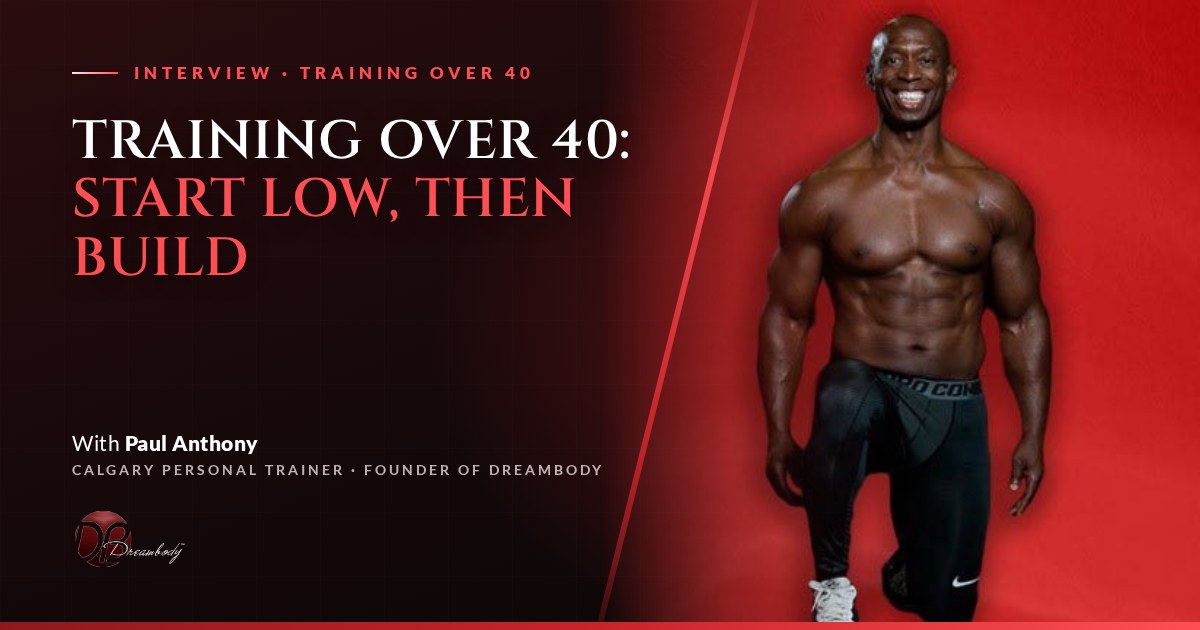 From this interviewPersonal Training Over 40: Building a Safe, Sustainable Strength PlanWhether you have never lifted or you are coming back after years away, Paul Anthony starts everyone over 40 the same way: at Level 1. Here is how his…
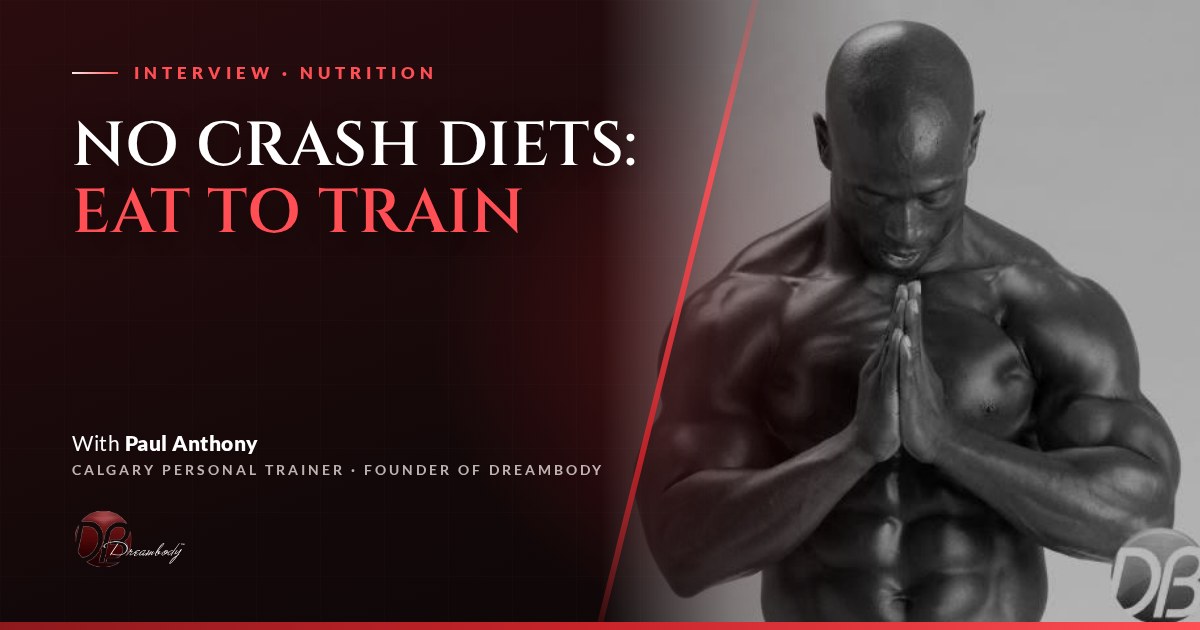 From this interviewNutrition Without Extreme Dieting for Busy Calgary Adults Over 40Paul Anthony deliberately keeps nutrition simple: at least three meals a day, all four building blocks on the plate, enough protein and no crash…
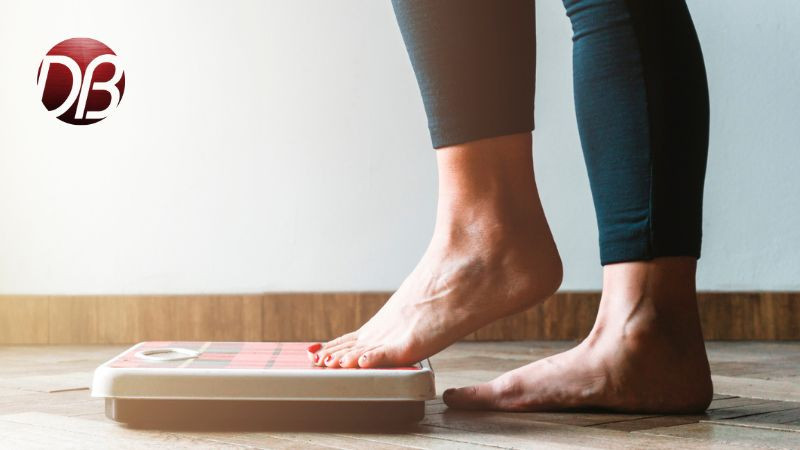 From the blogWeight Loss Plateaus: Why They Happen and How to Break ThemAn earlier Dreambody article on why weight loss plateaus happen and how to work through them.
 From the blogFat Loss vs Weight Loss: What's the Difference and Why It MattersAn earlier Dreambody article on the difference between losing fat and losing weight.